



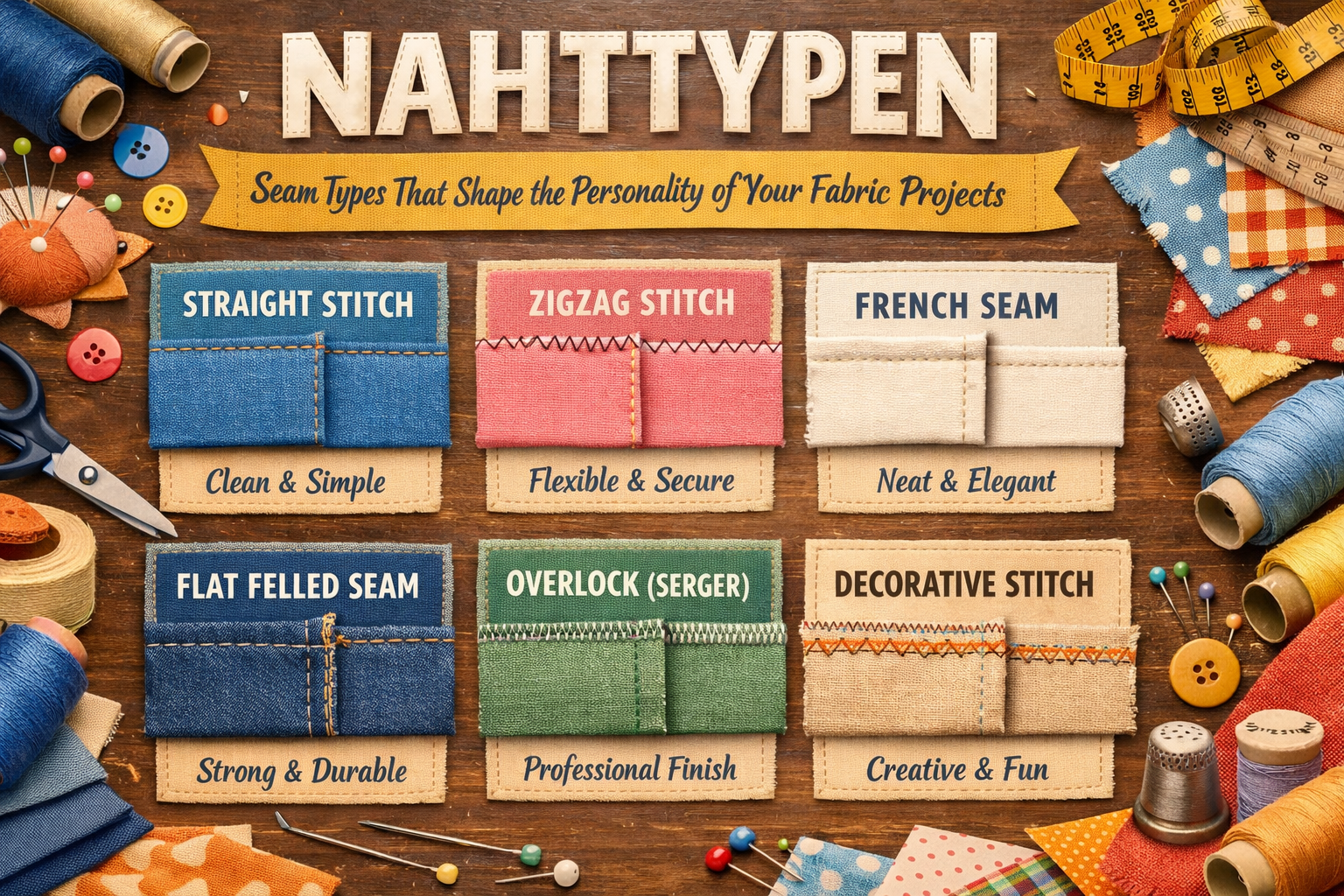
Nahttypen, When stepping into the world of sewing and fabric design, you’ll often come across the term “Nahttypen.” This German word simply means seam types, but its importance goes far beyond translation. Seam choices can determine whether your project looks professional, lasts for years, or falls apart after a few uses.
From simple accessories like tote bags to complex garments, the right seam can enhance both durability and visual appeal. With so many seam options available, understanding how each one functions will help you sew with confidence and creativity. Let’s explore the most popular seam types and how they can transform your fabric projects.
Why Choosing the Right Seam Matters
Selecting the correct seam type is one of the most critical decisions in sewing. Seams provide structural integrity, prevent fabric fraying, and influence the overall look of your finished piece.
For garments that endure daily wear, strong seams prevent tearing and stretching. Decorative items, on the other hand, may prioritize appearance and neat finishing. The type of fabric also affects seam selection—delicate materials require gentle seams, while heavy fabrics need reinforced stitching.
Ultimately, the right seam balances practicality and design, giving your project both strength and style.
Top 5 Commonly Used Seam Types and Their Features
1. Straight Seam
The straight seam is the most basic and widely used seam in sewing. It joins two pieces of fabric with a single line of stitching, making it suitable for almost any project—from clothing to home décor.
This seam is easy to sew and creates a flat, clean finish. With proper stitching and pressing, it provides excellent durability and serves as the foundation for many advanced seam techniques.
2. French Seam
French seams are ideal for delicate and lightweight fabrics like silk, chiffon, and organza. This technique encloses raw edges, preventing fraying and creating a polished, professional interior finish.
To create a French seam, you sew the fabric with wrong sides together first, trim the excess, then sew again with right sides together. The result is a strong yet elegant seam that looks beautiful inside and out.
3. Zigzag Seam
The zigzag seam is known for its flexibility and versatility. Its wave-like stitch pattern allows the fabric to stretch, making it perfect for knit fabrics and curved seams.
This seam also prevents fraying, especially on lightweight or loosely woven fabrics. Beyond functionality, zigzag stitches can add decorative flair when sewn with contrasting thread colors.
4. Flat Fell Seam
Flat fell seams are famous for their strength and durability. Commonly found in jeans and workwear, this seam encloses raw edges and creates a double-stitched finish.
Although it requires precise folding and stitching, the result is a professional-looking seam that can withstand heavy wear. It’s ideal for garments that need both strength and a clean, structured appearance.
5. Overlock Seam
The overlock seam, created with a serger or overlocker machine, trims and finishes raw edges simultaneously. This seam prevents fraying and adds elasticity, making it essential for knit and stretch fabrics.
Overlock seams are widely used in commercial garments due to their speed, durability, and professional finish. They are perfect for activewear, t-shirts, and stretchy materials that require movement and flexibility.
Key Factors When Choosing a Seam Type
Fabric Type
Different fabrics behave differently under stitching. Lightweight fabrics benefit from delicate seams like French seams, while heavy materials such as denim require stronger seams like flat fell seams. Stretch fabrics need flexible seams such as zigzag or overlock stitches.
Project Functionality
Consider how the finished item will be used. Everyday garments and frequently washed items need durable seams. Decorative items may focus more on appearance. Outdoor or heavy-duty items require reinforced seam types for longevity.
Aesthetic Preference
Seams can be hidden or showcased as design elements. French seams offer an invisible, elegant finish, while flat fell seams add visible structure. Thread color and stitch style can also contribute to the overall design aesthetic.
Tips for Sewing Seams Like a Pro, Nahttypen
-
Use sharp scissors and high-quality thread for clean stitching
-
Practice each seam on scrap fabric before starting your main project
-
Adjust sewing machine tension based on fabric type
-
Pin or clip fabric layers to prevent shifting
-
Sew slowly and steadily for precise results
-
Finish raw edges to prevent fraying and extend durability
-
Don’t worry about minor imperfections—handmade charm adds character
Conclusion
Understanding Nahttypen is essential for anyone passionate about sewing. The seam type you choose influences durability, comfort, and overall design quality. By considering fabric type, functionality, and aesthetics, you can select the perfect seam for every project.
With practice and experimentation, mastering different seam techniques will significantly improve your sewing skills and confidence. Whether you’re a beginner or an experienced sewist, the right seam can elevate your creations from homemade to professional.
Happy sewing! ✂️🧵

