


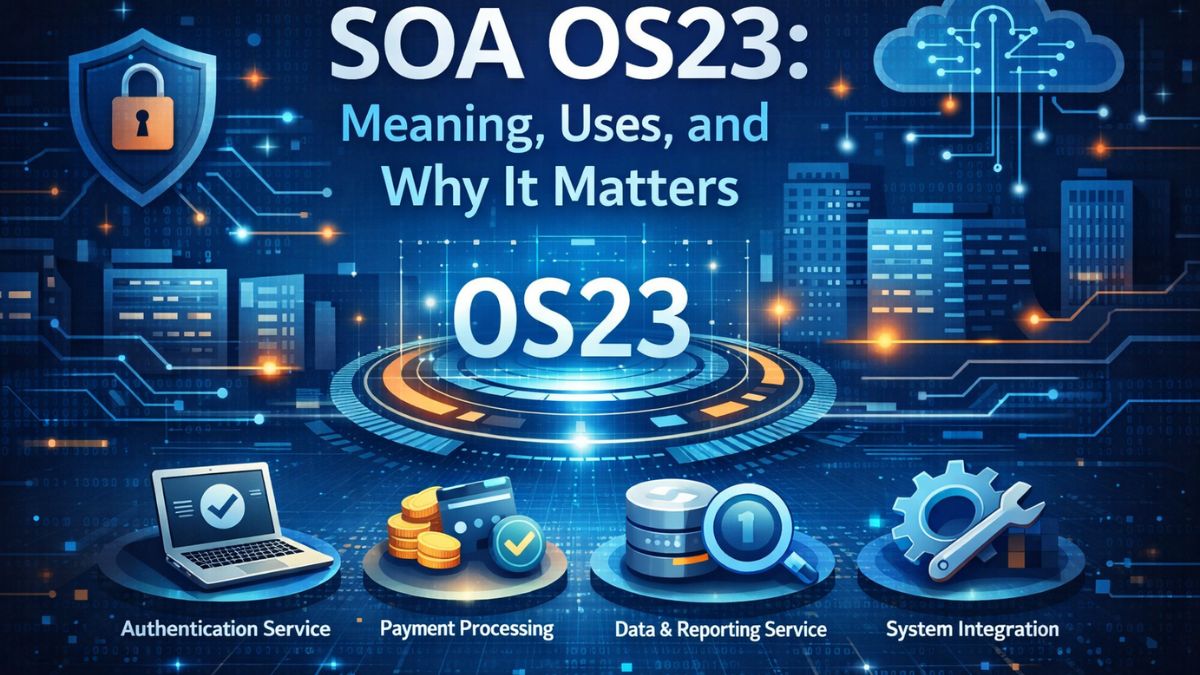
In many technical discussions, you’ll occasionally come across labels that look confusing at first glance. One of those terms is SOA OS23. When I first saw it mentioned in a technical forum, it appeared to be just another internal system code buried inside documentation. However, after exploring it further, it became clear that it relates to system architecture, integration environments, and operating system configurations.
If you’ve encountered the term SOA OS23 in enterprise documentation, configuration notes, or system architecture discussions, you may be wondering what it actually means and whether it’s something you need to understand.
Let’s take a closer look at what this term represents and why it matters in modern IT environments.
What Is SOA OS23?
SOA OS23 generally refers to a Service-Oriented Architecture (SOA) environment that is configured to run on a specific operating system version or internal system build identified as “OS23.”
This type of naming convention is commonly used in enterprise infrastructure, integration frameworks, and deployment documentation, where different environments must be clearly identified.
In most cases:
-
SOA stands for Service-Oriented Architecture
-
OS23 refers to a particular operating system version, environment label, or internal system build
Depending on the organization, OS23 could indicate:
-
A specific operating system release
-
An internal environment configuration
-
A deployment version used for testing or production
-
A structured system identifier within infrastructure documentation
While the exact meaning can vary, the architectural concept behind it remains consistent.
Why SOA OS23 Matters
The term SOA OS23 typically appears when a service-oriented system is deployed or configured to operate within a particular operating system environment.
This matters because system architecture and operating systems are closely connected. Even small changes in an operating system can influence how services communicate, integrate, and perform.
Understanding this relationship helps organizations maintain system stability, security, and performance.
Understanding Service-Oriented Architecture
To fully understand SOA OS23, it’s important to first understand Service-Oriented Architecture itself.
What Is SOA?
Service-Oriented Architecture is a software design approach where applications are built as a collection of independent services that communicate with each other over a network.
Instead of building one large, monolithic application, SOA divides functionality into separate, reusable services.
These services typically include:
-
Independent business logic modules
-
Reusable service components
-
Standardized communication protocols
-
Interoperable APIs
Each service performs a specific function and can operate independently.
For example, an enterprise system might include services such as:
-
Authentication service
-
Payment processing service
-
Customer data management service
-
Reporting or analytics service
These services interact with each other but remain loosely coupled, making the system easier to maintain and scale.
Why Operating System Versioning Matters
In enterprise systems, operating system versions are extremely important.
When documentation refers to something like OS23, it usually indicates a specific operating system build or system environment.
Even minor OS updates can affect several system components, including:
-
API communication protocols
-
Security configurations
-
Runtime environments
-
Database connectivity
-
Middleware compatibility
Because of this, architecture documentation often specifies the OS version used by a system.
So when you see SOA OS23, it typically means:
The service-oriented architecture system is designed to run on an operating system environment identified as OS23.
Where You Might See SOA OS23
This term is usually found in technical and enterprise environments, not consumer software.
You might encounter it in:
-
Enterprise application configuration files
-
Infrastructure documentation
-
Cloud deployment setups
-
ERP architecture notes
-
DevOps pipelines and build documentation
-
Internal system upgrade or migration reports
In most cases, it appears in backend system documentation rather than user-facing platforms.
How SOA Works in an OS23 Environment
To understand its real-world impact, it helps to see how SOA systems behave within a defined operating system environment like OS23.
1. Service Compatibility
Operating system updates can affect:
-
Runtime libraries
-
Network protocols
-
Security certificates
-
Kernel-level dependencies
Because of this, each service in an SOA system must be tested to ensure it remains compatible with the OS version.
2. Middleware Dependencies
Most enterprise SOA systems rely on middleware platforms such as:
-
WebLogic
-
IBM WebSphere
-
Apache ServiceMix
-
MuleSoft
-
Oracle SOA Suite
If OS23 represents a newer operating system environment, middleware patches or updates may be required to maintain compatibility.
3. Security Configuration Changes
Operating system updates frequently introduce changes to security frameworks, including:
-
Updated encryption standards
-
TLS protocol modifications
-
Firewall behavior updates
-
Access control policies
An SOA environment running on OS23 may require updated security configurations to maintain proper service communication.
SOA OS23 vs Monolithic Architecture
To better understand the advantages of SOA in environments like OS23, it helps to compare it with traditional monolithic systems.
| Feature | SOA (OS23 Environment) | Monolithic System |
|---|---|---|
| Structure | Distributed services | Single codebase |
| Scalability | Scales per service | Entire system scales together |
| Deployment | Modular updates | Full redeployment required |
| OS Compatibility | Service-level testing | Whole system testing |
| Flexibility | High | Limited |
| Maintenance | Easier isolation of issues | Complex system-wide changes |
In environments such as OS23, modular service updates are often safer than updating an entire monolithic system tightly tied to OS behavior.
Practical Example
Consider a banking platform built using service-oriented architecture.
It may include services such as:
-
Authentication service
-
Transaction processing service
-
Fraud detection engine
-
Financial reporting system
If the infrastructure upgrades to OS23, the IT team would typically need to:
-
Validate each service individually
-
Test communication between services
-
Update database connectors if needed
-
Refresh security certificates
The advantage of SOA is service isolation. If one component requires updates, the rest of the system can continue operating without disruption.
Common Challenges in SOA OS23 Deployments
Although SOA offers flexibility, operating system upgrades can introduce challenges.
Compatibility Issues
Older services may rely on libraries or dependencies that are no longer supported in OS23.
Performance Changes
Kernel updates can influence system behavior, including:
-
Thread scheduling
-
Memory management
-
Network latency
Integration Failures
If OS23 changes security protocols or SSL configurations, services may temporarily fail to communicate.
How to Prepare for an SOA OS23 Migration
Organizations planning to migrate to OS23 should follow a structured approach.
Step 1: Map System Dependencies
Identify:
-
Service runtime requirements
-
External APIs
-
Database connections
-
Middleware versions
Step 2: Test in a Staging Environment
Never apply major OS updates directly to production systems.
Instead, create a staging environment that mirrors the OS23 setup and run full integration testing.
Step 3: Review Security Configurations
Verify that the system’s security layers remain compatible with the new environment.
Check:
-
TLS configurations
-
Certificate validity
-
Firewall settings
-
Authentication services
Step 4: Monitor Performance
After deployment, compare performance metrics such as:
-
CPU utilization
-
Memory usage
-
Network throughput
-
Service response time
This ensures the OS23 environment does not introduce unexpected bottlenecks.
Frequently Asked Questions
Is SOA OS23 a software product?
No. It generally refers to a system architecture environment tied to a particular operating system version.
Does OS23 refer to Windows 23?
Not necessarily. OS23 may represent an internal OS build or environment label used by a specific organization.
Is SOA outdated today?
No. While microservices architecture evolved from SOA principles, many enterprise systems still rely heavily on SOA frameworks.
Can OS updates break SOA systems?
Yes. If services depend on outdated libraries or incompatible runtime environments, OS changes can disrupt system functionality.
Is SOA OS23 related to cloud computing?
It can be. Many SOA-based systems run in cloud infrastructure, where OS versioning still plays an important role in deployment environments.
Conclusion
The term SOA OS23 might initially appear to be just another technical label, but it actually represents an important concept in enterprise architecture.
At its core, it refers to the intersection between service-oriented architecture and a specific operating system environment.
This relationship matters because infrastructure decisions influence system stability, scalability, and security. Understanding how architecture behaves across different OS versions is essential for anyone working with enterprise platforms or backend infrastructure.
So the next time you encounter SOA OS23 in technical documentation, you’ll know exactly what it represents: a service-oriented system operating within a defined system environment where compatibility, security, and integration must all work together seamlessly.