


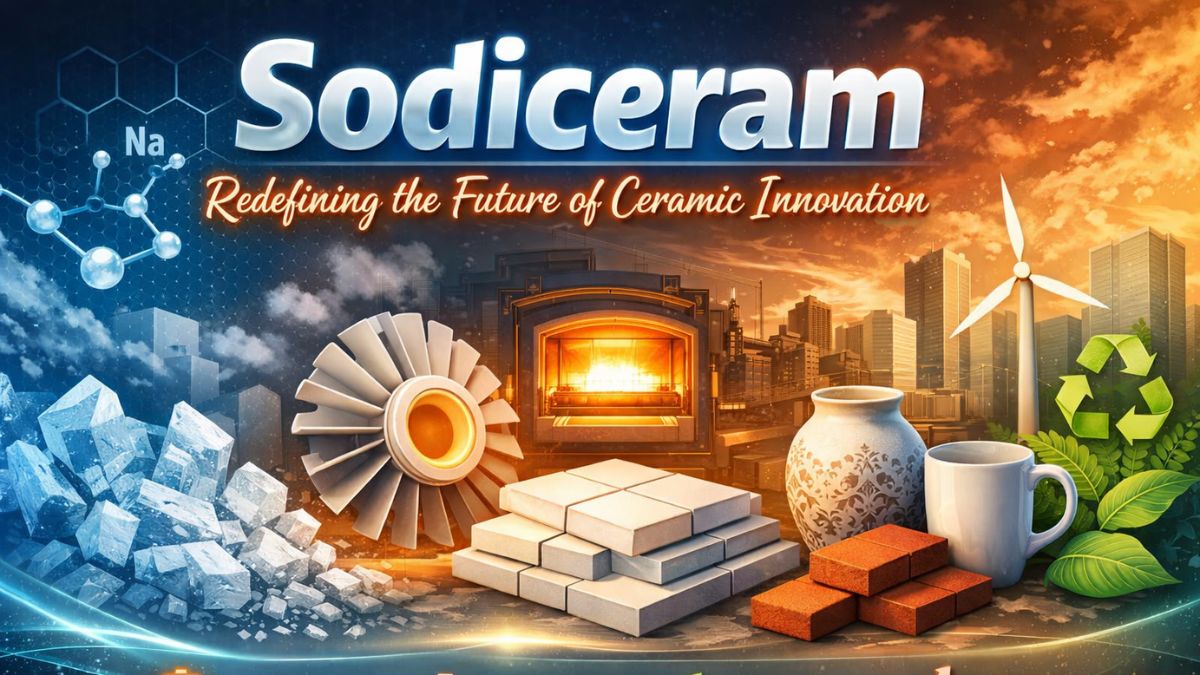
In the ever-evolving world of advanced materials and precision manufacturing, new concepts constantly reshape how industries operate. One such emerging concept is Sodiceram—a term gaining attention in ceramic science and industrial production. While not yet widely recognized outside technical circles, Sodiceram reflects a meaningful shift in how sodium-based components enhance ceramic performance, efficiency, and sustainability.
This article takes a deeper look into Sodiceram, exploring its scientific foundation, industrial value, applications, benefits, and long-term potential.
What Is Sodiceram? Understanding the Core Concept
Sodiceram is closely linked to ceramic systems that incorporate sodium-based compounds to improve material properties and production efficiency. Rather than representing a single product, Sodiceram describes an advanced approach within ceramic engineering.
At its core, the concept focuses on:
-
Performance optimization
-
Energy efficiency
-
Cost-effectiveness
-
Adaptability across multiple industries
It highlights how sodium compounds can transform traditional ceramic production into a more refined and sustainable process.
The Science Behind Sodiceram Technology
To truly understand Sodiceram, we must explore the role of sodium in ceramic chemistry and material engineering.
The Role of Sodium in Ceramic Processing
Sodium compounds often act as fluxes in ceramic manufacturing. Fluxes help reduce melting temperatures during firing, which:
-
Improves bonding between particles
-
Enhances material uniformity
-
Reduces overall energy consumption
This scientific mechanism is one of the primary reasons Sodiceram-based systems offer improved efficiency compared to traditional ceramic processes.
Structural Characteristics of Sodiceram Materials
Ceramics influenced by sodium-based treatments typically exhibit:
-
Fine-grain microstructure
-
Increased density
-
Enhanced resistance to mechanical stress
-
Improved surface smoothness
These structural improvements make Sodiceram suitable for both high-performance industrial components and aesthetically refined consumer products.
Sodiceram in Modern Manufacturing
Manufacturers across industries are constantly seeking ways to reduce costs while improving product reliability. Sodiceram contributes significantly to both objectives.
Energy Efficiency in Production
One of Sodiceram’s most compelling advantages is its ability to lower firing temperatures. Reduced temperature requirements mean:
-
Lower fuel consumption
-
Decreased operational costs
-
Reduced carbon footprint
In an era where sustainability is becoming mandatory rather than optional, this benefit alone makes Sodiceram highly attractive.
Improved Production Consistency
Uniformity is essential in industrial-scale manufacturing. Sodiceram enhances batch consistency, minimizing defects and increasing yield rates. This results in:
-
Fewer rejected products
-
Higher overall reliability
-
Stronger quality control standards
Key Applications of Sodiceram Across Industries
The versatility of Sodiceram allows it to serve a wide range of sectors.
Construction and Building Materials
In the construction industry, Sodiceram-based ceramics are widely applicable in:
-
Tiles
-
Bricks
-
Surface coatings
These materials offer durability, moisture resistance, and aesthetic flexibility—making them suitable for both interior and exterior environments.
Industrial Components and Equipment
Industries operating under extreme conditions require materials that can withstand high temperatures and chemical exposure. Sodiceram contributes to ceramic components that provide:
-
Thermal insulation
-
Corrosion resistance
-
Extended service life
Household and Consumer Products
From tableware to sanitary ware and decorative ceramics, Sodiceram enhances:
-
Surface finish quality
-
Strength and durability
-
Resistance to wear and environmental stress
Its influence quietly extends into everyday products used around the world.
Environmental Advantages of Sodiceram
Sustainability has become central to modern manufacturing, and Sodiceram aligns well with eco-conscious goals.
Lower Emissions Through Reduced Firing Temperatures
Lower energy requirements directly translate to reduced carbon emissions. By decreasing fuel usage during processing, Sodiceram supports greener manufacturing practices.
Minimized Material Waste
Enhanced consistency reduces production errors and material rejection rates. Improved yield efficiency helps manufacturers lower waste generation—benefiting both business performance and environmental impact.
Why Industries Are Turning to Sodiceram
Several factors are driving the growing adoption of Sodiceram technology.
Cost Efficiency Without Compromising Quality
Lower energy consumption combined with fewer defects creates significant cost savings over time. Manufacturers can maintain high product standards while improving profit margins.
Enhanced Performance Characteristics
Products developed through Sodiceram processes often demonstrate:
-
Greater structural strength
-
Improved smoothness
-
Better resistance to environmental factors
This combination of durability and efficiency makes it a competitive alternative to traditional ceramic production methods.
Challenges in Implementing Sodiceram
Despite its advantages, Sodiceram is not without challenges.
Technical Expertise Requirements
Precise formulation and controlled processing are essential. Skilled engineers and advanced quality management systems are often required, which may increase initial setup costs.
Material Access and Standardization
In some regions, consistent access to high-quality sodium compounds or standardized Sodiceram formulations may limit scalability and widespread adoption.
Ongoing Research and Emerging Opportunities
Innovation continues to expand the possibilities of Sodiceram technology.
Advancements in Material Engineering
Researchers are developing improved sodium-based formulations designed to enhance:
-
Thermal resistance
-
Mechanical strength
-
Adaptability for specialized industrial uses
Sodiceram in Emerging Sectors
New industries—including renewable energy systems, advanced insulation technologies, and electronics manufacturing—are exploring Sodiceram-based solutions for improved efficiency and performance.
The Future Outlook of Sodiceram
As industries worldwide prioritize sustainability, cost optimization, and material performance, Sodiceram is positioned for steady growth.
Rising Demand for Sustainable Materials
Stricter environmental regulations and increasing energy costs are accelerating the demand for innovative ceramic processes. Sodiceram aligns directly with these global trends.
Long-Term Impact on Ceramic Manufacturing
Over time, Sodiceram may evolve from an emerging concept into a standardized approach in ceramic engineering. Its influence could redefine how advanced ceramic materials are designed, produced, and optimized on a global scale.
Conclusion: Why Sodiceram Matters
Sodiceram represents more than a technical adjustment in ceramic processing—it symbolizes a strategic shift toward smarter, more sustainable manufacturing. By combining energy efficiency, structural enhancement, and cost-effectiveness, it offers meaningful advantages across construction, industry, and consumer markets.
As research continues and adoption expands, Sodiceram has the potential to become a cornerstone of modern ceramic technology—bridging innovation with industrial practicality.